THERMOCHROMIC YARN · TEMPERATURE-RESPONSIVE YARN
Thermochromic Yarn
Visible colour change triggered by temperature
Developed for knitwear, accessories and interactive textiles. Selection requires the trigger temperature, colour transition, material specification and final fabric construction to be considered together.
Same knitted construction · before and after heat contact


RECORDED PRODUCT ROUTES
Compare material and yarn count before choosing a model
These routes are based on current product records. Images support identification; confirm colours, thermochromic response and availability on the model page or when requesting samples.
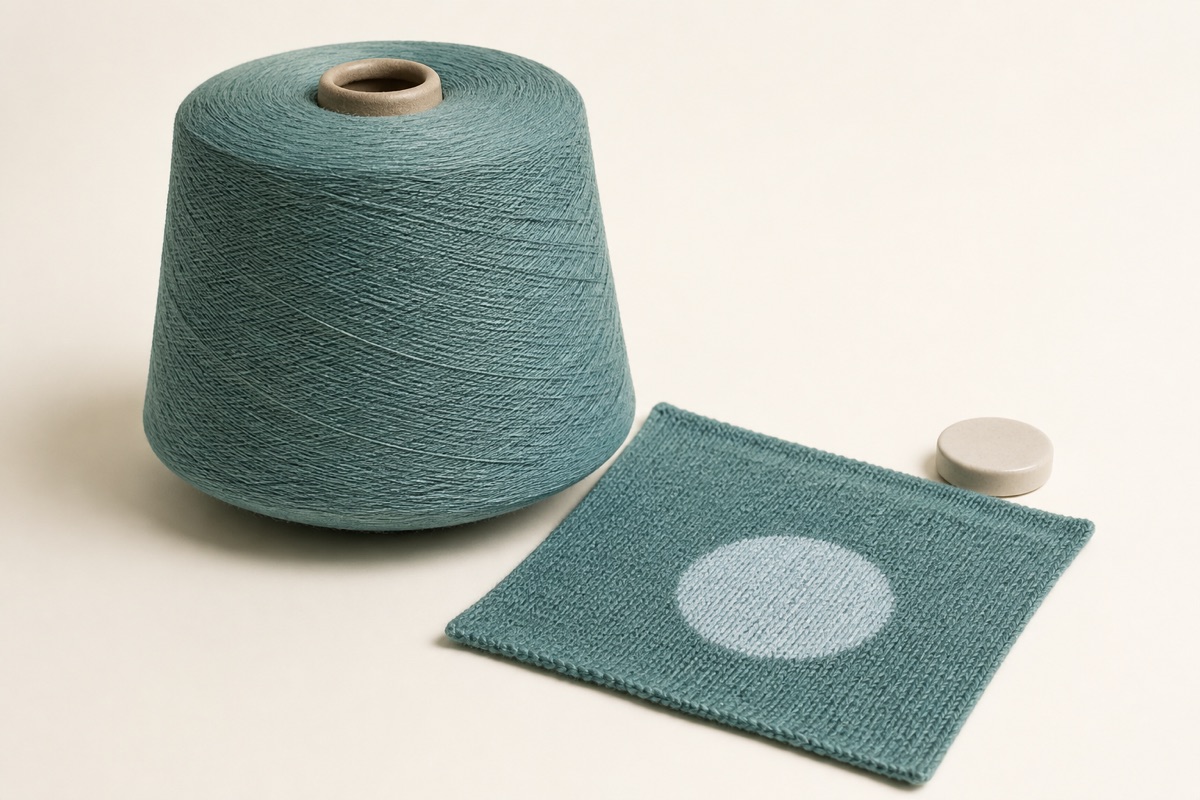 Featured model
Cotton Thermochromic Yarn
Approx. 31°C trigger recorded · 24 colour routes
- Composition
- 100% Cotton
- Yarn count
- 2/32S
100% Polyester2/150D
→02100% Polyester1/300D
→03100% Nylon1/280D
→04100% Nylon S1/280D
→05100% Polyester1/150D
→06100% Cotton2/32S
→CHINA SUPPLIER · COTTON KNITTING & CROCHET
Source thermochromic yarn from Yuexiong Textile
Dongguan Yuexiong Textile Co., Ltd. develops and supplies functional yarns from Dalang, Dongguan, Guangdong, China. For cotton knitting and crochet projects, start with the recorded HS6352 specification and confirm your intended construction by sampling.
- 01HS6352 cotton specification100% cotton · 2/32S · approximately 31°C activation recorded · 24 colour routes. Confirm the selected colour and response in your target fabric.Review HS6352 model data →
- 02Review the evidence before choosingThe buying guide describes recorded demonstrations and an anonymized commercial crochet-yarn use case. Order evidence does not establish wash durability, customer satisfaction or performance for every colour and batch.Read the evidence and buying guide →
- 03Request a project-specific quotationSend your application, yarn count, desired colour transition, quantity and destination. Confirm MOQ, sample cost, availability and lead time with sales for the selected model; no universal supply terms are implied.Request samples and a quotation →
SELECTION & VALIDATION
Five factors determine whether a sample is worth developing
This category page provides a selection framework. Model performance cannot be inferred from concept imagery or general category statements alone.
- 01Trigger temperatureMaterial temperature, not simply ambient temperature
- 02Colour transitionConfirm the normal, triggered and recovered states
- 03Material specificationComposition and yarn count affect processing and hand feel
- 04Fabric constructionGauge, density and structure alter the visible response
- 05FinishingWashing, setting and care require sample validation
BUYER DECISION CHECKLIST
What should buyers confirm before ordering thermochromic yarn?
Use this checklist before approving a yarn sample or bulk specification. Confirm values for the selected yarn code, batch and intended construction; pigment, ink or another supplier's data do not transfer automatically.
- 01Target activation temperatureState the material temperature and acceptable tolerance. Ambient temperature alone does not establish when the yarn will change.
- 02Colour transitionDefine the colour before and after activation, whether the response must be reversible, and the visual result required in the finished product.
- 03Yarn and constructionConfirm composition, yarn count, gauge, fabric structure and processing route. These variables can change the visible response.
- 04Test conditionsRecord the heat or contact method, ambient conditions, response and recovery time, wash method and cycle count used for evaluation.
- 05Sample and batch approvalTest the intended construction first, then agree acceptance limits for colour, response and batch-to-batch variation before bulk approval.
- 06Commercial confirmationAsk sales to confirm MOQ, stock or custom-colour route, sample and bulk lead time, available documents and quotation terms for the selected model.
SAMPLE BEFORE SCALE
Turn your intended use into a testable sample
Planning a thermochromic garment? Share the garment type, fabric construction, desired colour-change effect and estimated quantity to discuss material selection and development. Our team can help identify a yarn route and discuss yarn and target-fabric samples; finished-garment production and delivery scope must be confirmed for each project.
- 01Describe the use and transition
- 02Match a model and colours
- 03Sample the target construction